
My student loan stole from me for 12 years. I didn't notice. Here's why that matters.
Last month, something remarkable happened.
As usual, part of my salary was automatically diverted from my paycheque and landed somewhere in the vicinity of the Student Loans Company. And that was it. Gone. Finished. After 12 years, the debt I'd accumulated studying structural engineering - a subject used professionally for only a hot flash - was finally, mercifully, over.
I should feel victorious. Triumphant! I'm aware I'm one of the lucky ones - fees have since increased, I finished in three years, and I am fortunate enough to have actually cleared my debt. Plenty of people won't. What I mostly feel, though, is that I'd like a word with my 18-year-old self.
That version of me grew up on a farm in the middle of nowhere (near Doncaster, UK, if you’re wondering) and had precisely one plan for his future: get out of here. Going to Uni was the answer. Neither because I'd carefully weighed up the options, nor because I had a burning passion for load-bearing calculations, but because university was what you did if you were reasonably academic and wanted to go somewhere. Anywhere, really.
The alternatives, if they existed, I was unaware of.

My brother (on the left) and me (on the right) as fresh-faced graduates.
No refunds, no returns, no idea what you're buying
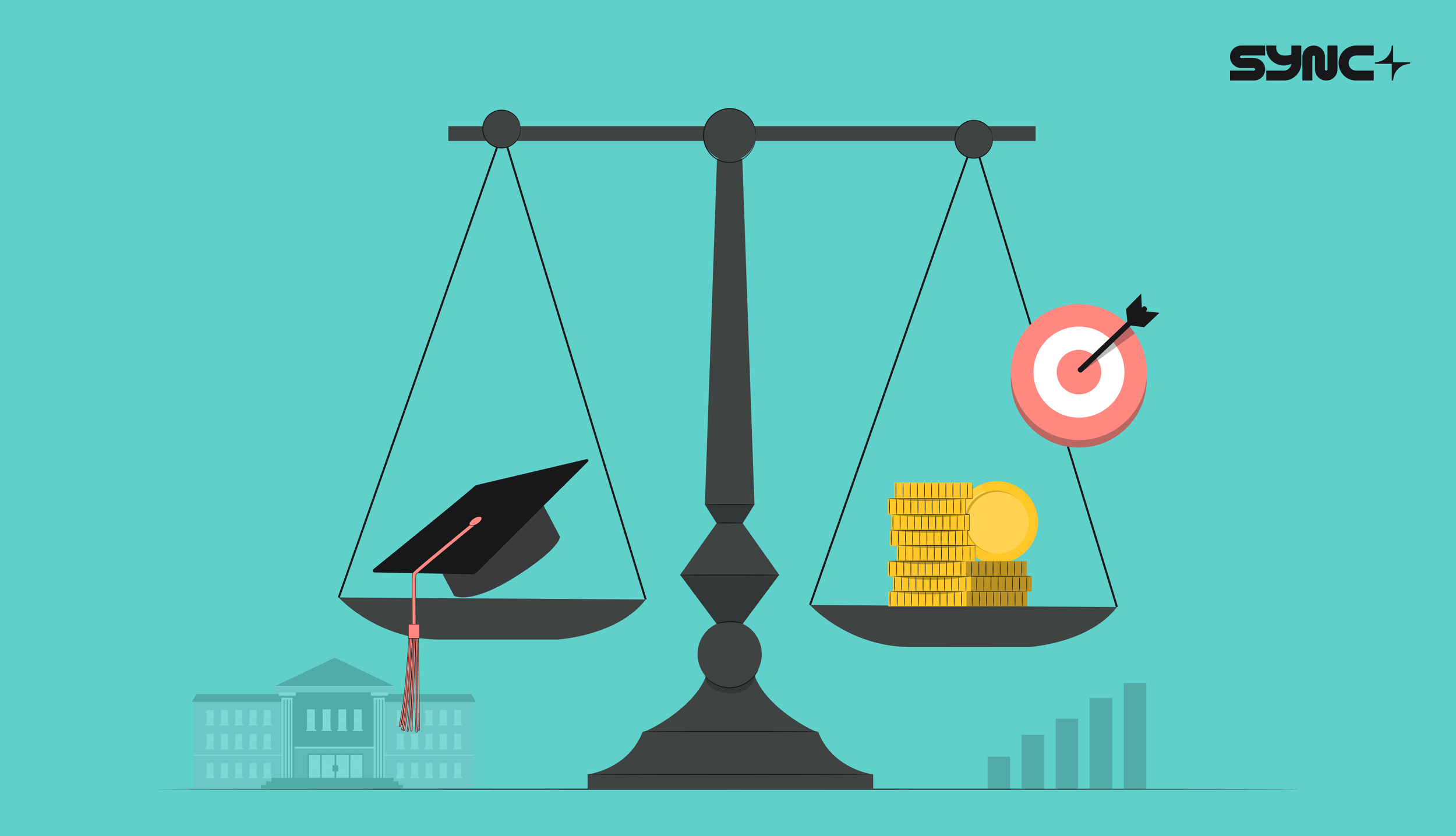
Here’s my fundamental issue with student loans, and university. We are asking people whose brains are literally still developing to make a decision that will cost them tens of thousands of pounds and define the next decade(s?) of their financial life.
The prefrontal cortex (the bit of the brain responsible for things like risk assessment, long-term planning, and generally not doing things you'll regret) doesn't fully mature until around age 25. We know this. Science has confirmed it repeatedly. And yet we cheerfully hand 18-year-olds a stack of debt and ask them in exchange to decide, with great confidence, what they'd like to do with roughly a third of every waking hour they'll ever have from here on out.
It is the anti-thesis of “try before you buy”. It is sign here, pay for it for the next three decades, oh and do let us know how the structural engineering goes.
I don't want to be too hard on universities. They work brilliantly for some people. If you know deep down in your soul, aged 18, that you want to be a doctor, an architect, or a lawyer, then yes, off you trot. You need that qualification. And I envy your commitment and knowledge of thyself. But let's be honest: a significant number of people currently working as partnership managers studied geography. Geography did not secretly prepare them for a life of account management. Like me, they were doing their best with incomplete information, and subsequently had to make a major post-uni pivot.
The one genuinely brilliant thing about my student loan
For the most part, my stupidity was painless. For the first eight years of repayment, I barely noticed the money leaving. That’s not because I'm rich. It's because student loan repayments are deducted at source, through payroll, before the money ever touches my bank account.
You don't miss what you never see. That is, it turns out, an extraordinarily powerful idea.
Had I possessed any awareness of the world or, frankly, myself in my early twenties (which I very much did not) I'd have moved to London, tried to find my way into a startup on some sort of internship or sweat-equity arrangement, gained actual real-world experience instead of textbook theory, and taken every pound I would have spent on loan repayments and put it somewhere it could grow. The figure that calculation produces is not a small one. It is, frankly, annoying to think about.
But the mechanism (the automatic, invisible, you-never-had-it-so-you-don't-miss-it deduction)... that part is genuinely clever. And it points to something important about how people actually build wealth, versus how they think they build wealth.
Humans aren’t great at saving. We are very, very good at spending what's in front of us. The psychological trick of payroll deduction isn't a trick at all - it's just working with human nature instead of against it.
Make saving easy.
Make saving the default.
Make spending the thing that requires extra effort.
And suddenly, saving isn't a personality trait. It's just Tuesday.
Enter the V-Level… better late than never
Which brings me, in a roundabout way, via Donny and some regrettable calculus, to some news I'm actually enthusiastic about.
In September 2027, the UK Government is launching V Levels - starting with education, finance, and digital, they're built around skills employers are actually hiring for - not the theory behind them, but the practice of them. And crucially, they can be mixed with A Levels, so no doors close before you've had a chance to look through them.
This matters because the landscape is (finally) starting to catch up with what young people actually need: a spread of options, clearly signposted, that don't have to come with five-figure debt and three-to-four years of theory and academia.
Had V Levels existed when I was choosing A Levels, I might have had a fighting chance of knowing there were other options. Instead, the only clearly signposted route out of a field in South Yorkshire was a university prospectus (which I didn’t read) and a UCAS form.
V Levels won't solve everything. But they're a start. And the fact that Generation Z employment is already growing faster than any other age group (up 10.9% year-on-year according to Employment Hero's latest data) suggests there's a generation ready to work if we give them routes worth taking.
Payroll Savings: a transformative idea
Yes, we’re now coming to my point. The most effective financial product most British workers have ever interacted with is their student loan repayment - and they didn't choose it, they don't think of it as a financial product, and they would probably prefer it didn't exist.
But, the mechanism works. Money leaves before you see it, life continues, loan begrudgingly shrinks. And for what it's worth, UK student debt is the least scary debt you'll ever have - no bailiffs, no credit file damage, just a silent line on your payslip that one day, eventually, stops appearing.
Now imagine applying that same mechanic to savings. Same principle, same invisible, relentless consistency, except this time the money is going somewhere that works for you, not against you. That's what Payroll Savings does. And yes, that’s our product, and yes, it's better-looking than your average payslip deduction. But the thing that actually moves the needle isn't the interface. It's the automation. The fact that you never had to decide. The fact that future-you gets richer while present-you does absolutely nothing.
The irony is that we've spent decades using this exact mechanism to collect debt repayments, while leaving savings largely to individual willpower - which is, as anyone who has ever meant to start saving "next month" can confirm, a deeply unreliable plan.
The V-Level generation will enter the workforce with better qualifications, stronger employment protections, and hopefully better tools. If we can combine those with a payroll savings infrastructure that works the same quiet magic as the student loan deduction, we might actually end up with a generation that's better off than ours.
…which would be good. That's rather the whole point.
Alex Fox
Co-founder & COO @ Sync
The V Level rollout begins September 2027. To read more about what the new qualifications mean for employers, Employment Hero has a good breakdown.
