Mandatory Emergency Savings are coming. Is your Payroll and Pension Scheme ready?

Long Read · 6 min
The Government is moving closer to looking to mandate emergency savings pots, and looking at whether they should sit within the pensions regime. For pension providers, master trusts, and workplace scheme operators, this isn't just a policy debate, it's an infrastructure challenge that's arriving faster than anyone is prepared for.
For Pension Providers & Trustees
"Pension providers built brilliant infrastructure for locking money away for forty years. Nobody built the infrastructure to make it accessible in a crisis. That gap could soon become a regulatory obligation, and a commercial opportunity."
Picture this: your boiler explodes in January. Or you lose your job with two weeks' notice. Or your car the one that gets you to work needs a repair bill you simply don't have. For 11 million people in the UK, a financial shock like this doesn't just cause stress. It triggers a debt spiral. And increasingly, it triggers something else that pension providers should be watching very closely: contribution cessation.
Members don't stop saving for retirement because they're irresponsible. They stop because the emergency fund doesn't exist and the pension can be turned off and or the pot is within reach. The result: insufficient and damaged retirement outcomes, scheme leakage, and a growing political pressure to act. Government is listening. Increasingly a question for pension providers is not if workplace emergency savings arrive, it's whether they're positioned to deliver them or will they loose engagement and potential revenue upside to payroll providers, benefits providers or banks. This becomes even more pertinent in a world of open data, open finance and AI where product providers and those owning user relationships become increasingly disaggregated.
The concept draws directly from auto-enrolment's playbook. Alongside the pension pot a member is already building, a slice of monthly contributions or an additional portion of earnings would flow into a separate, ring fenced Emergency Savings Pot. Accessible. Liquid. Auto-Enrolled. And potentially sitting squarely inside the pensions infrastructure that providers already operate.
46% of UK adults have less than £1,000 in savings
11m people have no savings buffer at all
£500 unexpected bill that would push millions into debt
88% auto-enrolment take-up rate since 2012
Why Pension and Payroll providers are in the crosshairs
The timing is not accidental. The ongoing cost-of-living crisis laid bare just how precarious household finances are. The Money and Pensions Service, the FCA's Financial Lives surveys, and successive reports from the Resolution Foundation have painted the same picture: Britain has a savings gap that no amount of financial education is closing on its own. And the pressure is also landing at the door of employers at cost - those who hold the answers are payroll and pensions providers with workplace savings relationships.
Behavioural economics explains the problem. Present bias – the deeply human tendency to value today's pound more than tomorrow's – makes voluntary emergency saving extraordinarily hard. Pension auto-enrolment sidestepped this by making inaction the pro-savings choice, the next logical step is to do the same for shorter term savings. The delivery mechanism will almost certainly run through the same payroll infrastructure and pension administration platforms that providers have spent years building.
There's a precedent abroad too. Singapore's Central Provident Fund mandates contributions across retirement, healthcare, and housing. Australia's superannuation system has introduced hardship withdrawal mechanisms. The US "Sidecar" model, piloted with Nest Insight in the UK allows emergency accounts to sit alongside pension pots. The global direction of travel is clear. The UK is not leading it. But it won't be far behind.
"The greatest threat to long-term retirement security is short-term financial vulnerability. Members raid their pensions, or stop contributing entirely, every time life goes wrong. Providers who build the emergency savings solution protect the pension outcome. Those who don't will lose the relationship entirely."
How would it actually work?
The mechanics matter enormously, and several competing models are being discussed. The devil, as ever, is in the detail.
01 The Sidecar model
An affordable portion of earnings is diverted into a liquid savings account before the rest goes into the pension pot or current account. Once the emergency account hits a cap (perhaps £2,000), all contributions revert to the pension. Simple. Targeted. Already trialled in the UK by Nest Insight.
02 The Hybrid Pension contribution
Total employer-employee contribution rates rise, with a defined slice earmarked as an accessible "liquid layer" for hardship. This helps bridge the savings gap by introducing liquidity rules that default to pensions. However there are key questions around which would be responsible for administration.
03 Tax Wrapper?
Mandatory contributions could be made under existing Salary Sacrifice rules or a kind of "Emergency ISA" wrapper. Potentially employer-matched, with a fixed annual ceiling or even eligibility criteria so that just those most in need benefit. A catch all approach would be much simpler from a roll-out and tax standpoint. As well as being easier for individuals to understand.
04 Winners and losers
An opt out payroll deduction, paid into an emergency savings account is not straight forward to administer. Is there a possible government backed provider such as NS&I, do we use this an opportunity to channels funds into the mutuals sector - a manifesto pledge of the Government? Or will the diminishing number of pension Master Trusts be responsible for running these schemes in which case how will we incentivise maximum user engagement and good interest rates from traditional providers and high street banks. One thing is for sure; the more minimal the individual autonomy; the lower the accountability; the more likely it is to be politically contentious.
The case for a safety net that protects the pension
The strongest argument for mandating emergency savings is one pension providers should be making themselves: a member in financial crisis is a member who stops contributing. Those most likely to face a financial shock, lower earners, those in insecure work are precisely the least likely to have voluntarily built a buffer, and precisely the most likely to opt out or pause contributions when the pressure hits.
There is also a powerful argument about scheme integrity. One of the biggest leakages in any pension scheme is contribution cessation during periods of financial hardship. People don't stop saving for retirement because they're feckless, they stop because the boiler broke and the pension pot is the only money they can reach. An emergency fund insulates the long-term savings against short-term shocks. For providers, this is not just a social good. It is a retention and AUM protection strategy.
Employers, too, might find unexpected benefits. Financial stress is one of the largest drivers of presenteeism and lost productivity. A workforce with emergency savings is demonstrably, in the research, a more focused, more engaged, less distracted workforce. Pension providers who can offer this as part of a scheme proposition will have a compelling story to tell corporate clients.
The savings advantage
Who will win the battle for employee savings pots remains to be seen. Payroll providers naturally hold the monthly access advantage, but pension providers have huge incentives to integrate schemes with great rates to capture cash coming out of pensions too.
There is also the infrastructure problem. Neither Payroll nor Pension providers are not banks. Liquid savings require different administration, different withdrawal mechanisms, different regulatory treatment. Integrating genuine liquidity into a system designed for view only pay data or forty-year lockups is not a trivial technical challenge. The providers who are already investing in this capability or partnering with those who have it will be ready when the rules land. Those who aren't will be scrambling.
And then there's the saver experience challenge. Emergency savings only work if employees understand and trust them. That requires digital interfaces, clear communication, and fast access. It requires the kind of consumer-grade product thinking that the payroll and pensions industry has historically struggled with. This is not just an administration problem. It is a product problem.
The opportunity for Providers
Deepens the customer relationship beyond payroll or retirement savings alone
Competitive differentiator in employer tender processes
Positions providers as whole-life financial partners, not just payroll or pension pots
Protects member contribution rates, fewer opt-outs during financial shocks
Auto-enrolment mechanics are already proven and understood
First movers build infrastructure before it's mandated, on their own terms
Strong political momentum, likely regulatory inevitability
The risks of inaction
Regulatory obligation arrives before infrastructure is ready
New entrants and fintechs move faster and own the member relationship
Complex liquidity integration requires investment now, not later
Member experience shortfall damages trust in the whole scheme
Employers choose providers who've solved this – others lose mandates
DWP consultation moves quickly; waiting means reacting, not shaping
Reputational risk of not having a credible answer to a political priority
The verdict: the window for preparation is now
Mandatory emergency savings pots will not arrive overnight. There will be consultation, legislation, implementation periods. But the direction is set. The Nest Insight sidecar trial, DWP engagement on financial resilience, and cross-party interest in the auto-enrolment extension all point in the same direction. Providers who treat this as a distant policy question will find themselves building infrastructure under regulatory pressure, under time pressure, with no competitive advantage to show for it.
The providers who move now who invest in the product, the integration, the member experience will not just be compliant when the rules land. They'll have already shaped what best practice looks like. They'll have the employer relationships, the member trust, and the operational capability to make this a genuine differentiator rather than a compliance cost.
The question for every provider's leadership team is not "will this happen?" It's "who in our organisation owns the answer and have we started building it yet?"
That's exactly the conversation Sync Savings exists to have.
Sync Savings is already building the solution
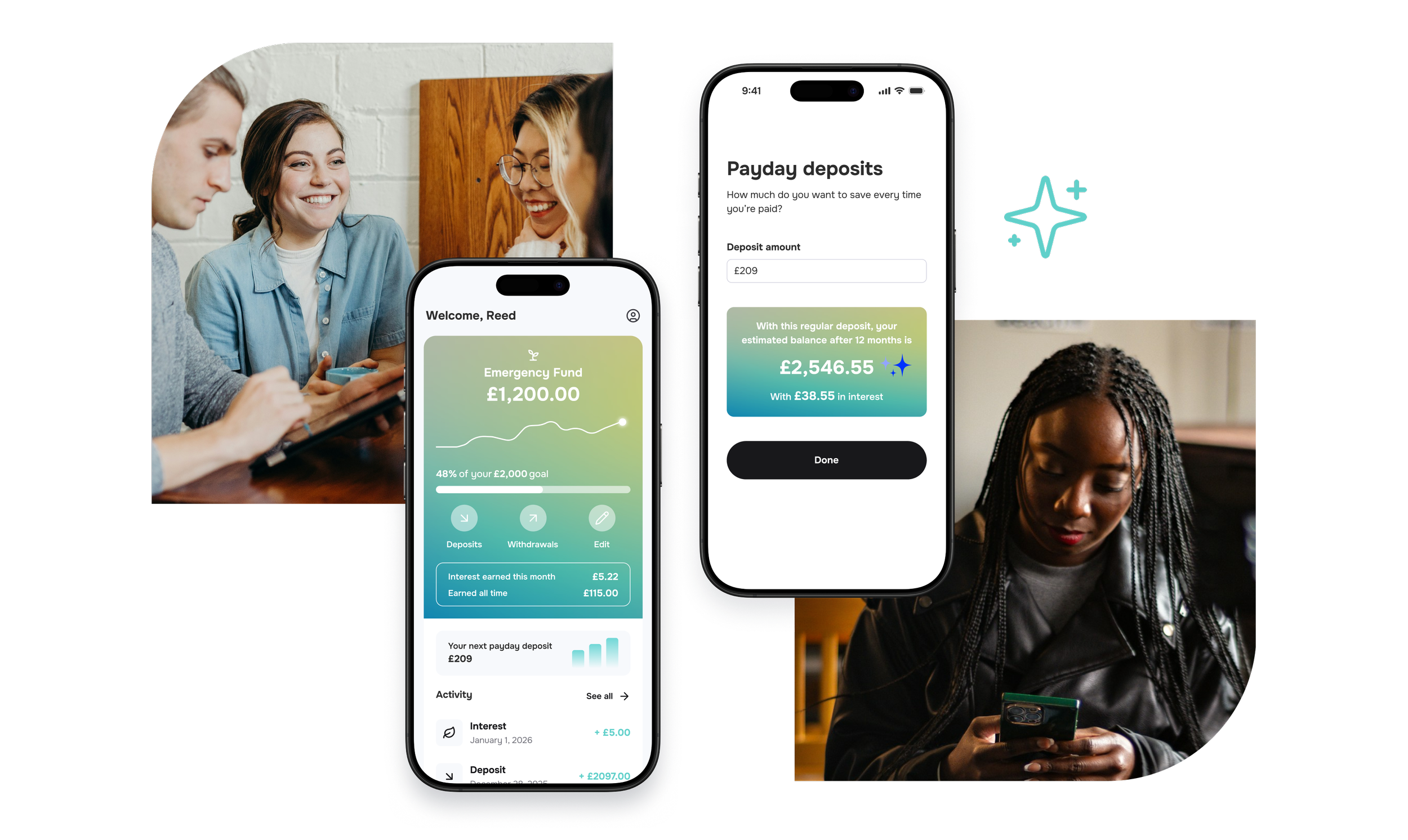
We've designed an emergency savings platform built specifically to integrate with payroll, employee benefits, pension providers, master trusts, and workplace schemes so you're not starting from scratch when the policy lands.
Let's talk about what this means for your scheme.