
Your tips are finally protected by law. But is that actually enough?

Since October 2024, the Employment (Allocation of Tips) Act has been in force. That means - legally, finally - as a member of staff every penny of your tips has to land in your pocket. No more restaurants quietly skimming off "admin fees." No more employers keeping a cut of your service charge. Around two million hospitality workers stand to benefit, with an estimated extra £200 million going directly to staff.
Great news. But here's the thing nobody's talking about.
Getting your tips is only half the battle. Keeping them, and making them work for you, is the hard part.
The volatility problem
If you work in hospitality, your income doesn't just vary week to week. It swings wildly. Tips can represent 50–60% of your total earnings over Christmas, then drop to 20-30% in January - the very month everyone's already broke. More than a minor inconvenience, this can lead to a fundamentally unstable financial life.
And the numbers on what that stress does to people are grim.
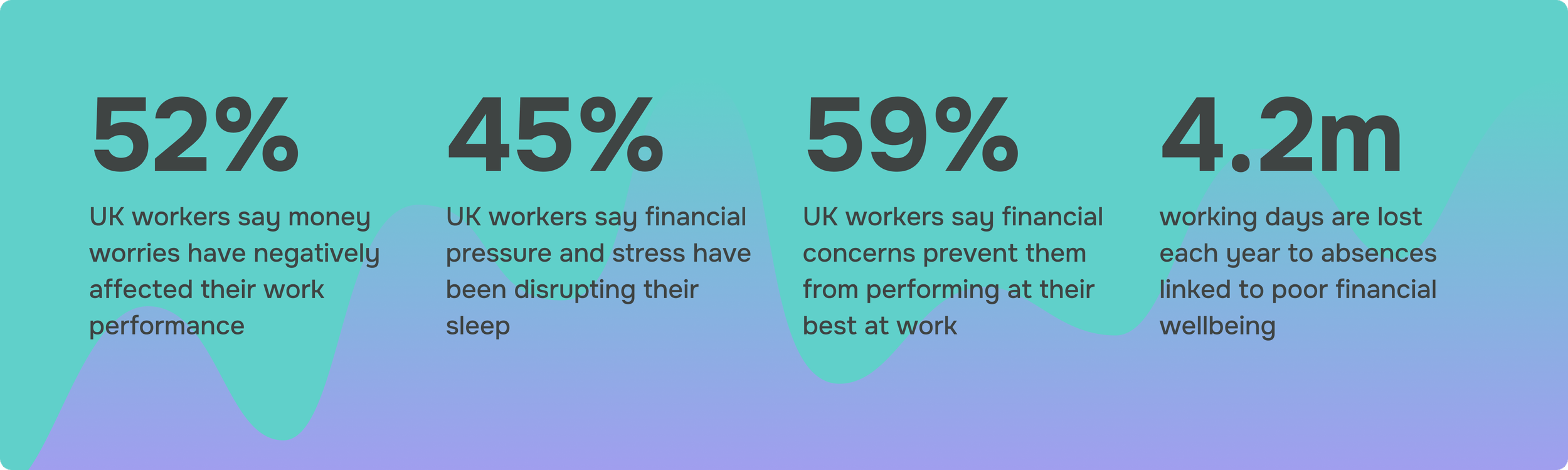
Financial pressure is now the top external stressor for UK workers, with 52% saying money worries have negatively affected their work performance and 45% saying it disrupts their sleep. 59% of employees admit financial concerns prevent them from performing their best at work, and 4.2 million working days are lost each year to absences linked to poor financial wellbeing.
For hospitality workers riding the tip rollercoaster, that burden is even heavier.
The savings gap
33% of UK adults say they wouldn't be able to afford an unexpected but necessary expense of £850. And for people with unpredictable incomes, saving consistently feels almost impossible without the structure to make it happen automatically.
This is where the legislation, as welcome as it is, hits its limits. Fair tip distribution solves the input problem. It doesn't solve what happens next.
What actually changes behaviour
There's a well-worn example here: workplace pensions. Before auto-enrolment, only 47% of UK workers were saving into one. After making it the default? That jumped to 87%. Same people, same wages with a system designed to make the right thing, the easy thing. Another mechanic that works consistently well? Student loans, with repayments deducted at source, through payroll – you don't miss what you never see.
The same logic applies to tips. If a portion of every tip payment could be automatically directed into a savings pot (before it ever touches a current account and gets spent) workers build a financial cushion without having to think about it. During a busy December, they save more. In a quiet February, they draw on it. Income smoothed, stress reduced.
So what does the solution actually look like?
That's exactly what we dug into: how technology can sit on top of the new legislation to turn tip compliance into genuine financial empowerment for hospitality workers. We looked at the data, the tools that exist today, and what it means for employers who want to do more than just tick a legal box.
We wrote a whole whitepaper about it 18 months ago in partnership with Grateful. The logic was sound then. What's changed since? We've actually built it. Grateful now has Sync's Payroll Savings live on their platform - and we're already seeing the benefits of tips flowing straight into savings accounts automatically.
Turns out, when you make saving the default, people save. Who knew.
The whitepaper's worth a read. The real-world proof is starting to come in.
