
(On its own) Financial education is useless and avoids fixing the actual problem
Teaching people about money doesn't work
Financial education is politically cheap and structurally useless. There… we said it.
Every few years, someone in government announces that we're going to fix the UK's savings crisis by teaching teenagers about compound interest.
It's a nice idea. It's also, on its own, almost entirely useless.
Financial education isn't the problem but it is distracting form the solution by mistaking the diagnosis. The UK’s savings crisis is because saving is hard, inconvenient, and easy to put off, not because people don't understand savings. No GCSE module has ever changed any of that.
Teaching people to swim doesn't fix the flooding.
Behavioural science is the key to success
Here's what we know about how humans make financial decisions: we are not rational. We are value convenience above all else, we get distracted, and we default to whatever requires the least effort. This is the most well-evidenced finding in behavioural science, and it has enormous implications for how you get people to save.
In a study, a university dining hall moved cookies from a prominent spot to an out-of-the-way corner, changing nothing else (price, menu, recipe, etc). They found instantly consumption dropped by around 22% by making the cookies just slightly harder to reach. “Proximity” and ease are the most important thing when influencing behaviour.
Savings work exactly the same way. If saving requires a decision (opening an app, transferring money, remembering to do it before you've already spent it) most people won't do it consistently (most people don’t do it) because life gets in the way.
The study is "Nudge to Nobesity II" published in the journal Judgment and Decision Making.
More proof: pension auto-enrolment
Before 2012, workplace pension participation among private sector workers was around 32%. The government ran information campaigns, employers sent communications, and there were countless financial literacy initiatives.
At this stage, US researchers had spent years studying what happened when companies switched their 401(k) plans from opt-in to opt-out and the results were so consistent, so dramatic, that the UK government took notice. The Turner Commission was set up in 2002 under Tony Blair, and Baroness Jeannie Drake and Lord Adair Turner, lead the charge on implementing this approach in the UK. They did the same thing, but made it law. Auto-enrolment made pension saving the default for every eligible employee in the country. Private sector participation shot from 32% to 75% in a few years. Nobody suddenly understood pensions better, but the system stopped requiring them to act.
That is the most important data point in UK personal finance of the last twenty years, and it is almost entirely absent from the conversation about financial education.
Through education, people understood that pensions mattered, but simple changes to the infrastructure is actually what made them save. Would you rather a population that understands financial resilience, or have a population that is financially resilient?
The fix is simple, and obvious → Payroll Savings
Make it happen at source, and make it easy.
99% of employees gets paid through payroll at least every month, making payroll is the single most powerful point of intervention in anyone's financial life, upstream from every spending decision they'll every make. Before rent, food, bills, credit repayments, shopping, etc.
A small, automatic deduction at that moment (into a savings account the employee controls and can can always access) does more for long-term financial resilience than any number of lessons about APR. This mechanism is called Payroll Savings.
And this is what we specialise in at Sync - we provide payroll-integrated savings that employees can set up in minutes, that runs automatically every pay cycle, and that requires zero ongoing willpower to maintain, and is incredibly easy for employers to run. We are changing global savings infrastructure to help more people save more. Making saving as easy as not saving (and a lot more fun) is what actually works.
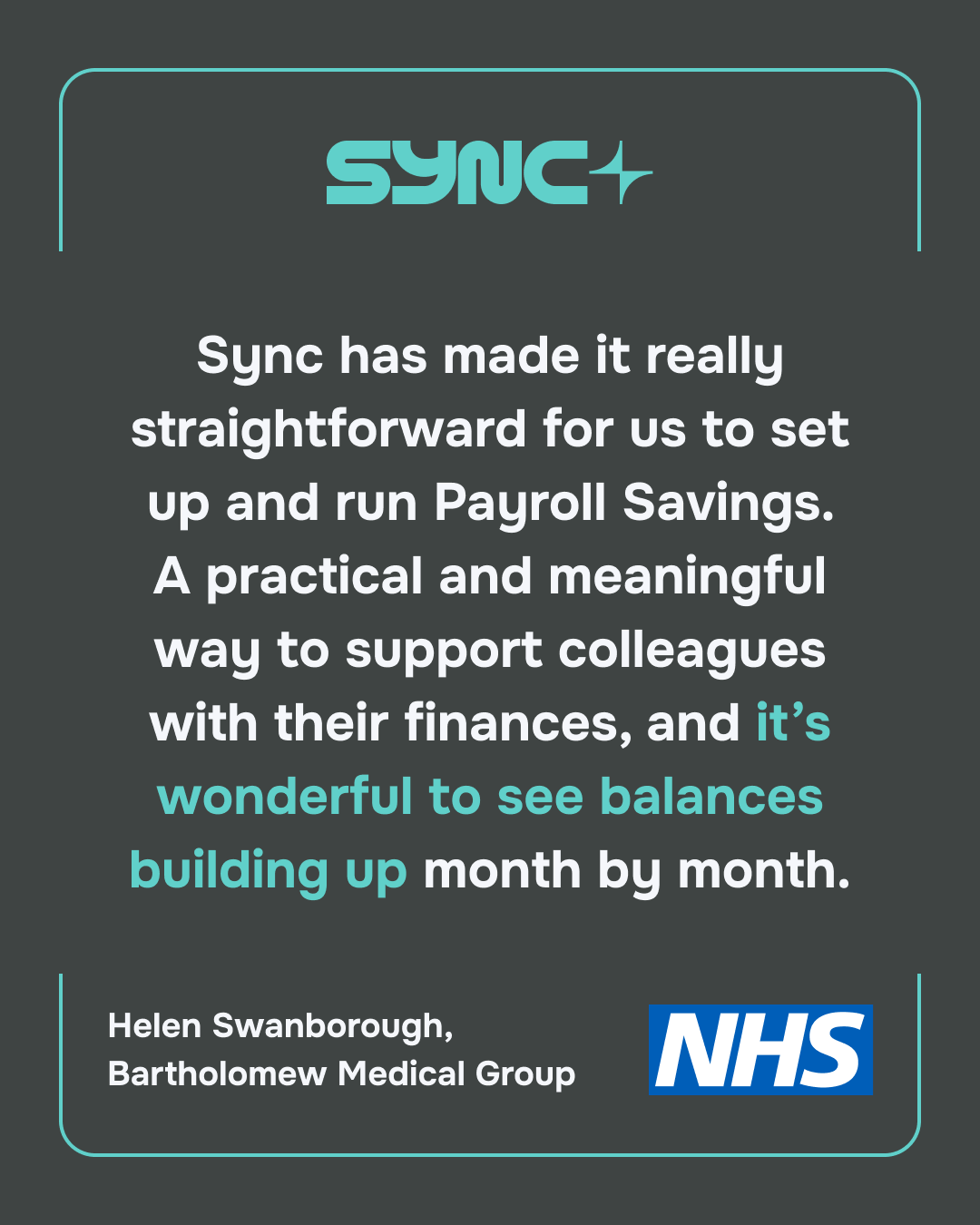
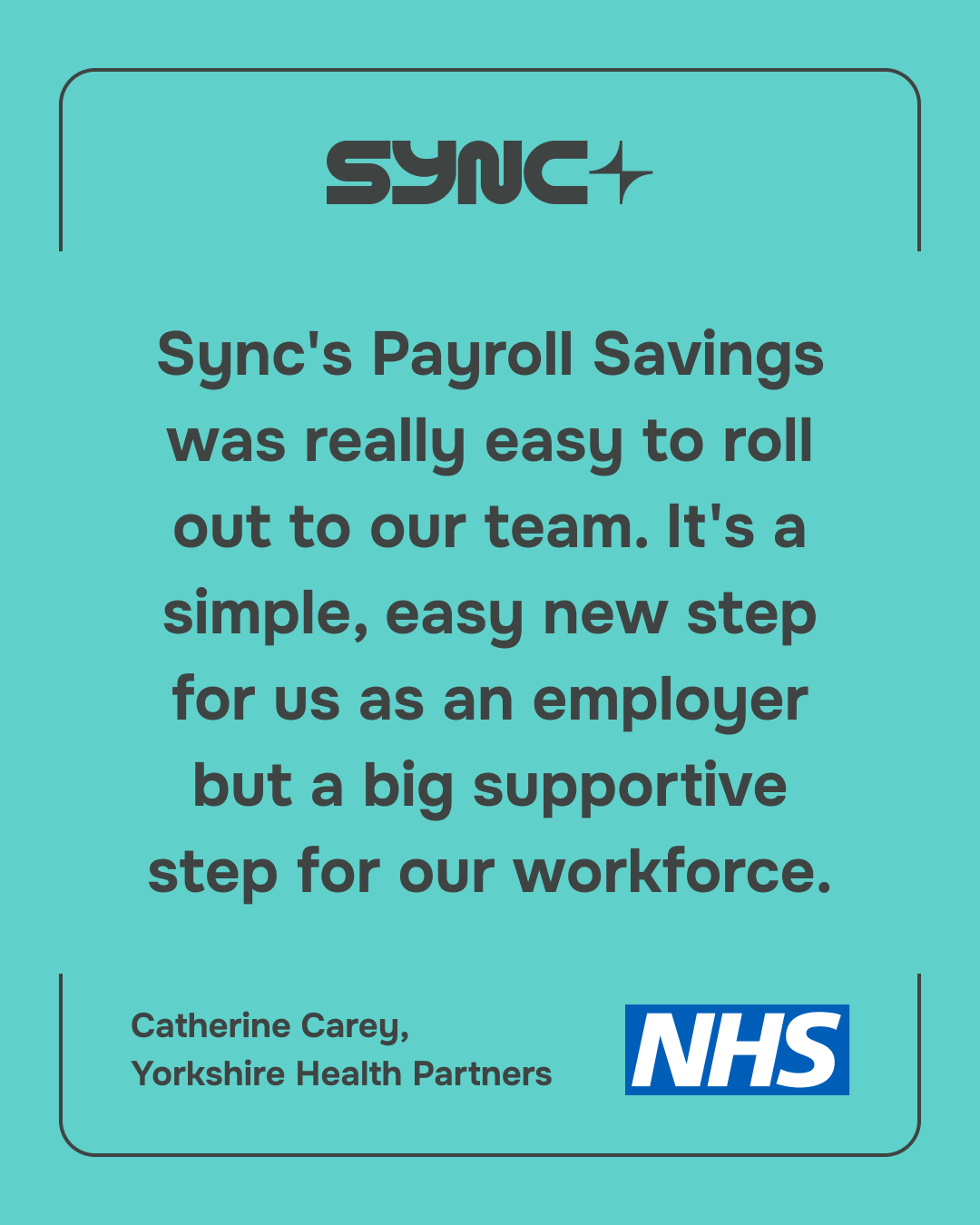
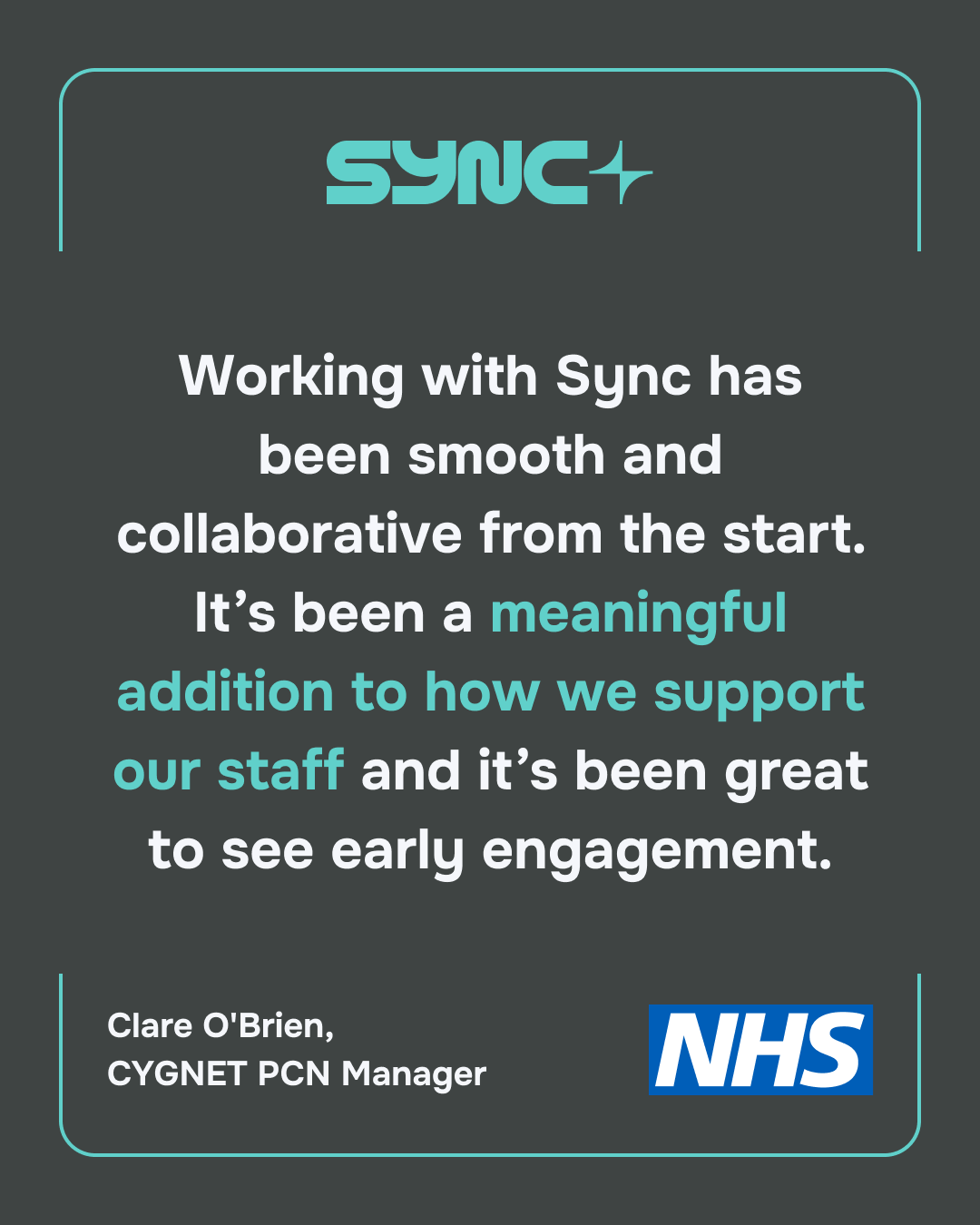
These are testimonials we received from NHS practices using Sync’s Payroll Savings. Easy, smooth, and straightforward.
Keep the education, but for heaven’s sake, change the system
Of course, financial education isn't worthless. Context is really important - understanding why you're saving, and what for, makes you more likely to stick at it. On its own though, the impact is nominal.
And there's a version of financial education that is incredibly powerful: the kind that meets people at the moments that shape their financial lives. E.g. understanding how a mortgage works, and if buying vs renting is right for you, or knowing what a new baby does to your monthly outgoings before it happens rather than after. Having someone explain the true cost of Klarna, buy-now-pay-later, and rolling credit card debt in plain English, before those habits bed in. Knowing how to handle finances through a bereavement, when decisions feel impossible and the admin is relentless. That kind of education (timely, specific, tied to real life events) can influence how people make decisions. It's why we built our financial wellness hub.
But when it comes to savings specifically? Education alone moves the needle only so far. Knowing you should save more is not the same as actually saving more - and the gap between those two things a because of friction.
Education without infrastructure is a gesture. It makes policymakers feel better without making employees more financially secure. And in a country with a £300bn retirement gap and half the workforce with less than a month's salary in savings, gestures aren't enough.
Teach people about compound interest, absolutely, but if we want to to have real impact, at a meaningful scare, first we need to make sure that their future employers are providing tools to make saving automatic and frictionless from day one.
Sync makes payroll savings simple for employers to offer and effortless for employees to use, with amazing interest rates.
