
Will I lose my (payroll) job to AI? Probably.
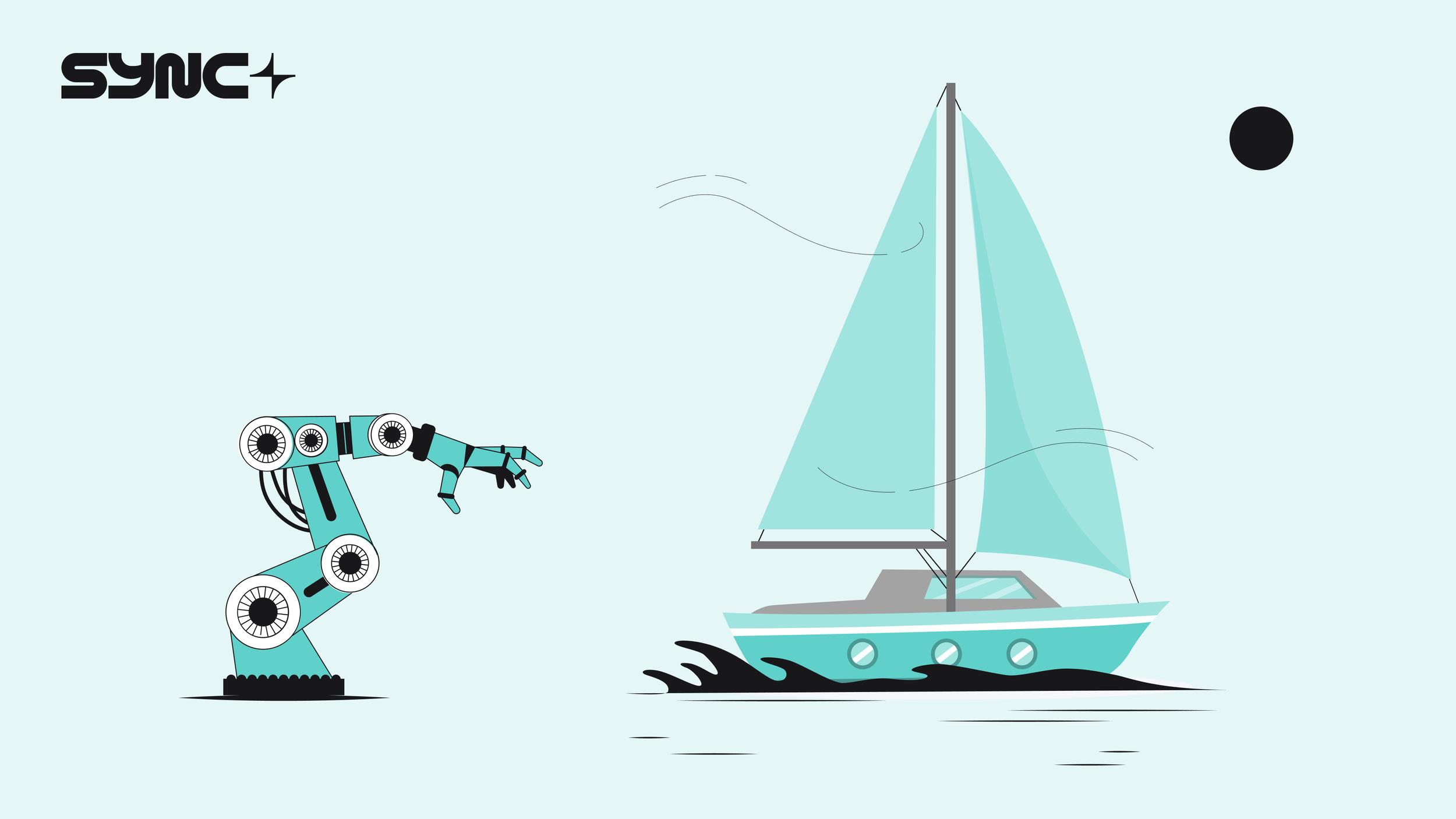
An industry that keeps the world running… what happens when the machines come for it.
“The pessimist complains about the wind; the optimist expects it to change; the realist adjusts the sails.”
This is a potentially triggering post. It doesn't have a tidy reassuring conclusion, and it won't pretend that everything is going to be fine. But it is intended to help. Or at least, to be honest in a way that I hope is more useful than the alternative.
I was at a payroll conference recently. The sponsors were all on stage, one after another, showing off their wares. Every product (unsurprisingly) without exception was heavily AI-focused. And every Q&A session, without exception, was dominated by the same question from the floor of payroll professionals that boiled down to: "Will I lose my job?"
The sales reps all gave a well-practiced version of the same answer: "No, this will allow you to do your job better, and free up your time for more important work."
Trollop, politely delivered. Half that crowd will not be in attendance in five years' time.
The thing is, that question (will I lose my job?) wasn't really a payroll question. It’s the defining question of our moment, just happening to surface in a football stadium conference room in front of a slide deck. The same anxiety is sitting in law firms, accounting departments, marketing agencies, and tech teams.
I've been turning the question over ever since I left that conference, and as it happens, I had dinner recently with a friend who thinks he knows how it plays out. His view: universal basic income is inevitable in the next 25 years. That once AI handles the tedious work, humanity gets on with more meaningful pursuits. A post-work world. He was remarkably cheerful about it, even while acknowledging that the transition will be long, painful, and likely force a major restructuring of society on a scale we haven't seen since the industrial revolution. I think he's directionally right. I also think he's optimistic about the timeline.
I am, for what it's worth, optimistic and enthusiastic about AI. More so probably than the general consensus. But being “bullish” on AI doesn't mean pretending it won't reshape the workforce in ways that are uncomfortable and real.
The realist adjusts the sails. So let's look to the wind.
The uncomfortable truth is that Payroll is ripe for the AI picking
The research on this is, frankly, not especially comforting if you work in payroll. Studies consistently place payroll admin in the top ten most AI-exposed professions - somewhere around fifth to eighth overall, depending on who you ask. The reasoning is logical, if brutal: payroll is structured, rules-based, largely digital, and easy to audit for quality. It is, in the cold taxonomy of automation risk, exactly the kind of work that software tends to eat.
The numbers that follow are sobering.
Today, with existing tools analysts project we can obtain a 50% reduction in payroll errors and processing times cut by a quarter. The longer-term picture is starker, with a ~50% reduction in headcount over the coming years, hitting larger organisations first. By 2031, many teams may be running at less than half their current size while managing the same volumes - because one person with the right AI tools can, by most estimates, do what used to take three.
That is a significant shift, and the people facing this shift are not a group of drones doing mindless work that deserves to be automated. They are professionals who have spent years mastering a function that is fiendishly difficult to get right, in an environment that keeps changing the rules.
Payroll professionals are tough as nails
Payroll is hard - it rarely gets said enough.
Not hard in the way that brain surgery is hard, but hard in the way that demands a specific kind of relentless, detail-oriented expertise. Their reward, in most organisations, is to go entirely unnoticed - a privilege that evaporates the moment anything goes wrong. A misfiled tax code, miscalculated statutory payment, or salary that doesn't land on time because of a bank holiday someone forgot. These are things that cause people to miss rent payments, to have difficult conversations with their partners, to sit anxiously refreshing their banking app on a Friday afternoon.
The people who prevent that from happening are doing something of fundamental importance. And they are doing it while fielding a continuous stream of legislative curveballs from a government that has a cheerful habit of announcing significant compliance changes with approximately enough lead time to make yourself a pot of coffee and buckle in for the ride. Making Tax Digital, GDPR, off-payroll working rules, the endless recalibration of NI thresholds, pension auto-enrolment rules, apprenticeship levy calculations, legislation changes on national minimum wage and (upcoming) holiday pay …inhales…. Each one requiring careful judgement that comes only to those with a deep understanding of the system.
This is the context in which the AI disruption question lands.
There are still many things the “machines" can't do
The roles that survive won't be the ones that process data. They'll be the ones that require cross-company context, an understanding of what a change actually means for the person on the other end of the payslip, and (perhaps most threateningly for a machine) human judgement.
Some examples:
Exception handling: the retroactive adjustments, the disputed deductions - one-off corrections where context matters and things outside the software ecosystem are at play and a rule-engine can't quite get there.
Regulatory interpretation in edge cases, where the legislation is new enough that nobody is entirely sure how it applies.
Final sign-off on payroll runs - accountability is a human thing (for now) and someone has to be responsible when something goes wrong.
And, perhaps most importantly, conversations with employees who are confused, worried, or angry about their pay, and who need something that a chatbot cannot reliably manufacture: the experience of being heard by a person who understands the problem and can fix it.
The payroll professionals who navigate the next decade well will be the ones who shift from being processors to being strategists - people who understand the system well enough to supervise it, interrogate it, and catch it when it produces something that technically follows the rules but is obviously, humanly, wrong. That is a higher-skilled, better-paid version of the job. It is also a smaller one, which is the tough pill to swallow.
This has happened before
Zoom out far enough and the payroll question becomes a version of the question every industry is grappling with: what happens when efficiency goes up and headcount comes down, across enough sectors at once to constitute a huge social shift?
The optimistic answer (there is one!) is that we have been here before. Agriculture gave way to industry. Industry gave way to services. Each transition was disruptive and uneven and involved a great deal of legitimate anxiety, and each one eventually produced a world with different jobs in it, not no jobs.
The payroll profession isn't disappearing (on a 25–50 year timespan), but it is being reorganised around the parts that are most difficult. The parts requiring experience, empathy, and a tolerance for governmental chaos. Those parts, it turns out, are quite a lot of it. And paradoxically, as AI absorbs the routine processing load, it creates space for payroll teams to focus on things that have always mattered but rarely got attention, like whether employees are actually financially okay, not just correctly paid.
Which is a natural moment to mention Payroll Savings – the ability for employees to set money aside automatically, at source, before it reaches their current account. It sounds simple, because it is. But the implications are larger than they first appear. Payroll reaches every employed person in the country, at least once a month, with an engagement rate no bank or pension provider can come close to matching. It sits upstream of every financial decision an individual makes. The UK has a £300bn retirement gap, and the research is consistent: people save more when the friction is removed, and payroll is where friction disappears most completely. We explored all of this in some depth in our recent white paper – the short version is that whoever controls the moment pay lands controls the gateway to every financial product an employee will ever need. At Sync, we're building in that direction. The bolt-on is simple. The idea behind it is not.
As the profession evolves toward more strategic, human-centred work, championing employee financial wellbeing is exactly the kind of value-add that belongs in payroll's future. At Sync, we've tried to make this as simple as possible to implement - a bolt-on, value-add, and not a burden.
What comes after?
My dinner companion's vision of universal basic income and a post-work world isn't as far-fetched as it sounds. If AI continues on it’s trajectory of compressing the labour required for cognitive, rule-based work (and nearly all the projections suggest it will) then at some point the question stops being "which jobs survive" and starts being "what is an economy actually for."
There are a few ways this could go. Nobody really knows, but the broad options are: the rich get richer and everyone else gets a stipend; governments step in with taxes on automation and some form of universal income; or we reach a point where AI generates enough abundance that people are simply free to get on with living.
History says we'll muddle through. We always do. The farming world didn't collapse when factories arrived. It changed. The industrial world didn't collapse when the service economy took over. it reorganised. Every transition took longer than anyone hoped and was messier than anyone planned. But a world with different jobs emerged each time. The people who did best were the ones who saw it coming and moved toward it rather than dug in.
The more concrete version of this is already being assembled. At the intersection of payroll technology, open finance and AI, a new financial services architecture is taking shape: one where the moment pay is processed triggers a personalised, real-time view of what you can afford to save, what you owe, and where your money should go. This approach optimises your payslip, making it work much harder than it currently does. That is not a distant vision. The regulatory infrastructure for open pensions and open finance is being built now. The window is open now, and not indefinitely.
The 2030s are probably when this gets turbulent, when the "automation cliff" hits enough sectors simultaneously that policy responses can no longer keep up with displacement. The 2040s are when new equilibria start to form. The 2050s are when my friend's vision might actually start to look like plausible normality.
In the meantime: adjust the sails.
In summary
Payroll professionals process the numbers that become someone's grocery shop, mortgage, school uniform, holiday. Accurately, on deadline and in the face of legislative complexity that would make most people's eyes water…. without any expectation of recognition.
The machines are coming for some of that work. A significant portion of routine payroll work will be done faster and cheaper by software, and pretending otherwise doesn't help anyone - least of all the people in that conference room who deserved a straight answer.
But here's the thing: payroll is not a back-office function quietly facing obsolescence. It is the most powerful access point in UK personal finance. Every employed person. Every month. Upstream of every financial decision they will ever make.
The professionals who see that (who look past the processing to the strategic ground payroll actually occupies) aren't staring down the end of something.
They're standing at the beginning of it.
